From 2D and 3D massage technology – what can massage chairs do?
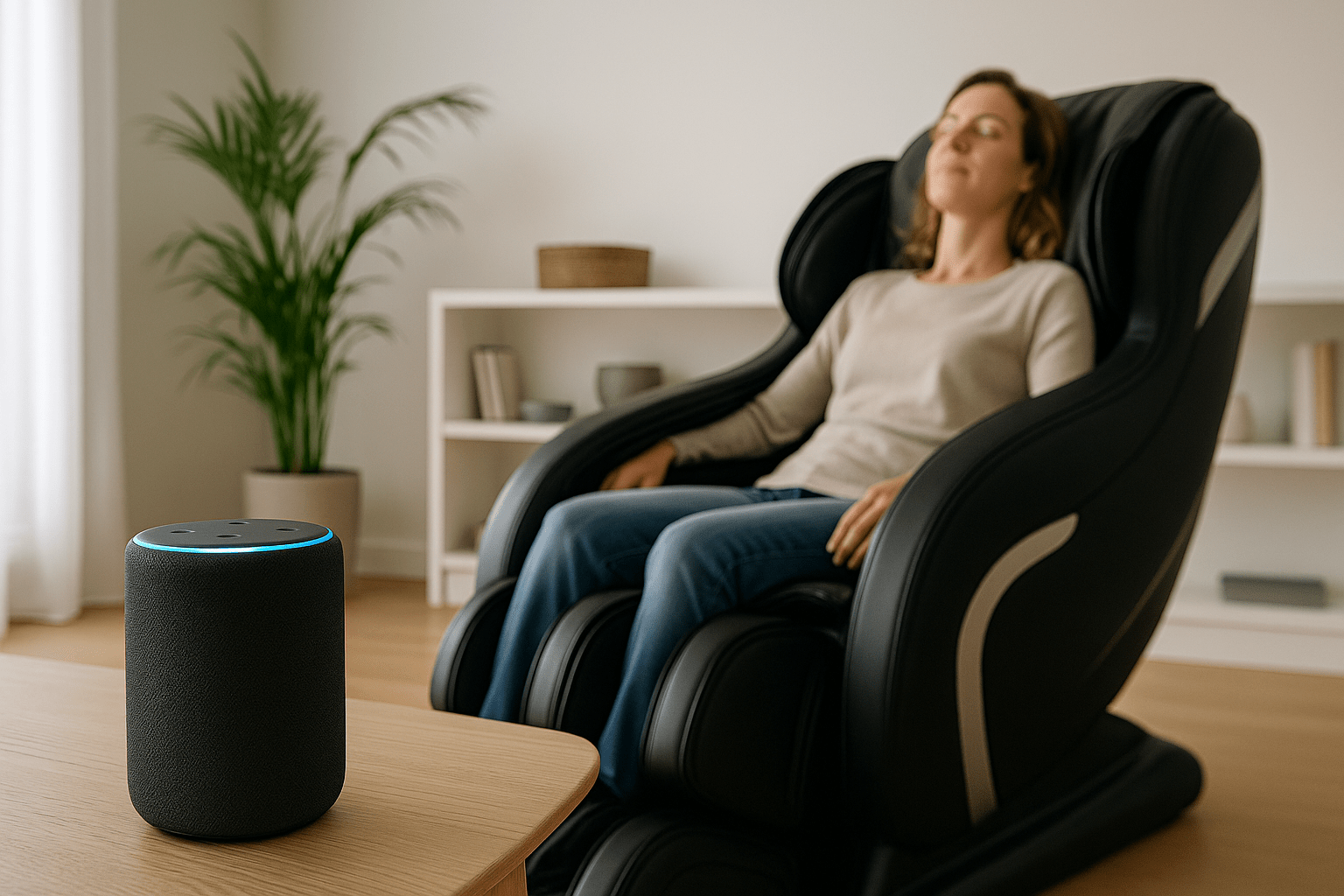
At the end of a tiring day at work, plagued by tension or with your head buzzing and mentally stressed, you just want to get home and relax. A very comfortable way to do this is with massage chairs, which are becoming increasingly popular. The rapid development in this area now offers numerous functions with different approaches and focuses, which of course you first want to keep an overview of. Today we will focus on the different massage techniques and how they differ. So if you've already stumbled across terms like 2D, 3D or 4D massage technology, then we'll now...

At the end of a tiring day at work, plagued by tension or with your head buzzing and mentally stressed, you just want to get home and relax. A very comfortable way to do this is with massage chairs, which are becoming increasingly popular. The rapid development in this area now offers numerous functions with different approaches and focuses, which of course you first want to keep an overview of. Today we will focus on the different massage techniques and how they differ. So if you've already stumbled across terms like 2D, 3D or 4D massage technology, then we'll now tell you what's behind them.
Reading tip: From head to toe: This is how massages help
Massage rollers – the hands of a massage chair

Before we get an idea of the different massage techniques, it makes sense to take a look at the technology inside a massage chair. Massage rollers are a central element here; they are, if you like, the hands and carry out the massage through their movement. What differs between different models is, on the one hand, the number and arrangement of the massage rollers and, on the other hand, their movement options. This is exactly where the terms 2D and 3D come into play.
The 2D massage technique
The designation 2D indicates that the possible movement pattern of the massage rollers extends over two spatial “dimensions”. On the one hand, the role controls movement from left to right and, on the other hand, from top to bottom. It is the simplest technical implementation, which is why it can also be found in inexpensive massage chairs. A 2D massage is therefore the minimum requirement for a massage chair.
The 3D massage technique
With the 3D massage technique, the two existing directions of movement of the rollers are supplemented by another. Here the rollers have the ability to move in depth and not just from left to right and from top to bottom. Here, additional targeted pressure can be generated at desired locations. A function that is extremely useful in combination with 3D massages is the body scan function. Depending on your stature and size, a scanner records your measurements and can adjust the depth of the massage roller in the right places.
The advantage of the body scan function is clearly a more individual massage that adapts precisely to your body. After all, among other things, the neck muscles of a 190 cm tall person are in a different position than of a 160 cm tall person.
A 3D massage technique is definitely better in terms of quality and significantly superior to 2D massage. Tailor-made treatments have a much more effective effect on tension and hardening that arise from everyday life and thus contribute better to well-being. But the movement possibilities of the massage rollers alone are by no means everything.
The arrangement of massage rollers – I-Track, S-Track and SL-Track
In addition to 2D and 3D massage techniques that a massage chair can handle, the arrangement of the massage rollers and heads also plays a high role in terms of quality. There are basically three different arrangements here:
● I-Track system
● S-Track system
● SL-Track system
The former gets its name from the massage rollers arranged along a line. They are rigidly arranged on one level and do not really conform to the shape of the spine. The S-Track system, on the other hand, addresses this and, as the name suggests, is arranged in an S-shape, like the human back. This means that pressure is distributed evenly across all parts of the spine. The SL-Track system is an extension. The “S” again refers to the back, and the “L” to at least one more massage roller under the buttocks. If you imagine a sitting person, the massage rollers of an SL-Track system run from top to bottom along the back and then at an angle under the buttocks.
Here again, the I-System represents the minimum requirement, while S- and SL-Track systems can pamper you with high-quality, tailor-made massages. The arrangement and movement options of massage rollers now form the basis for various massage techniques that a massage chair can now offer. We'll focus on this next.
What massage techniques can a massage chair cover?
The repertoire of massage techniques of a massage chair essentially depends on the basic requirements just described, such as the arrangement and mobility of massage rollers. The progressive development in recent years has made it possible for high-quality massage chairs to accommodate almost all common massage techniques. Your own massage chair corresponds to your personal masseur in your own four walls, who provides you with classic massage techniques.
● Massage technique kneading/petrissage:
In this technique, skin and muscle areas are grasped with a grip and gentle pressure is applied. This relieves tension and promotes local blood circulation.
● Massage technique rollers:
This massage technique is more likely to be classified as a modification of a classic massage technique. The closest thing to it is stroking (effleurage), in which gentle massage movements are carried out parallel to the course of the muscle fibers.
● Massage technique hitting, tapping / tapotement
One of the more intensive massage techniques is tapping, which usually involves rhythmic tapping with the edge of the hand or the heel of the hand to promote local blood circulation and increase muscle tone. This method is often used before exercise as it increases muscle tension, promotes blood circulation and stimulates the nervous system.
● Massage technique friction (friction):
Here, circular, punctual movements are carried out to loosen knots in the muscle tissue. This method penetrates particularly deep into your muscles and thus relieves you of unpleasant hardening.
● Vibration massage technique:
Here, rhythmic movements are used to loosen muscles into the deeper tissue. This technique is mainly used towards the end of a massage treatment in order to end the treatment with the greatest possible relaxation.
With the right technology to regular well-being
Due to the rapid development in recent years, massage chairs have become real all-rounders. Extensive functions, innovative techniques and options for tailor-made treatments also bring with them a certain level of complexity. Each massage chair can therefore support you with different goals, help you relax, relieve pain or keep your muscles relaxed and ready for use during a sporty lifestyle. Take your well-being to the next level with a massage chair tailored to your needs.Mitgründer und Geschäftsführer der Massagesessel Welt. Mit seinem Expertenwissen und seiner Branchenkenntnis hilft er, Privatpersonen und Unternehmen zu passenden Massagesessels für Entspannung, Gesundheit und Vitalität zu finden. Die individuelle Fachberatung erfolgt sowohl telefonisch oder per Videochat, als auch in der Ausstellung vor den Toren Stuttgarts.