
Hüftbeuger dehnen: Übungen und was die Forschung zeigt

Michael Roedeske
Inhaber der Massagesessel Welt
Zuletzt aktualisiert:

Warum der Hüftbeuger beim Sitzen kurz wird
Sie stehen nach acht Stunden am Schreibtisch auf, und die ersten Schritte gehen steif. Der Rücken zieht, die Hüfte fühlt sich an, als müsste sie erst wieder auftauen. Der Muskel, der dafür meistens verantwortlich ist, sitzt nicht im Rücken. Er heißt Iliopsoas, im Alltag Hüftbeuger, und er ist der einzige Muskel, der die Lendenwirbelsäule direkt mit dem Oberschenkel verbindet.
Im Sitzen ist dieser Muskel dauerhaft angenähert. Hüfte gebeugt, Ursprung und Ansatz nah beieinander, Stunde um Stunde. Der Körper passt sich daran an, wie er sich an alles anpasst: Was er nicht braucht, baut er ab. Der Muskel bleibt kürzer, als er sein sollte.
Wenn Sie dann aufstehen, zieht dieser verkürzte Muskel von innen am unteren Rücken. Das Becken kippt nach vorn, das Hohlkreuz wird stärker, die Lendenwirbelsäule bekommt mehr Last als vorgesehen. Wie stark das wiegt, hat 2024 eine Untersuchung an Studierenden im ersten Studienjahr gemessen: Ab etwa 8 Stunden Sitzen am Stück stieg das Risiko für Rückenschmerz, und rund die Hälfte der Betroffenen gab an, lange ohne Rückenstütze zu sitzen. Junge Menschen an Schreibtischen also, nicht der 55-jährige Fliesenleger. Die Richtung deckt sich trotzdem mit dem, was uns Kunden seit Jahren über ihren Arbeitstag erzählen.
Woran Sie einen verkürzten Hüftbeuger merken
Der einfachste Test geht auf einem stabilen Tisch. Setzen Sie sich mit dem Gesäß ganz an die Kante, so weit, dass die Sitzbeinhöcker gerade noch aufliegen. Ziehen Sie ein Knie mit beiden Händen zur Brust und lassen Sie sich langsam nach hinten in die Rückenlage sinken. Das andere Bein hängt frei.
Sinkt der Oberschenkel des freien Beins bis auf Tischhöhe ab, ist alles in Ordnung. Bleibt er darüber in der Luft, ist der Hüftbeuger verkürzt. Streckt sich zusätzlich das Knie des freien Beins von allein, zieht auch der gerade Oberschenkelmuskel mit. In der Physiotherapie heißt das Thomas-Test.
Wenn Sie ohnehin gerade Ihren Körper vermessen: Im Körper-Check steht auf 13 Seiten, welche Maße bei der Sesselwahl zählen und woran Sie merken, dass ein Sessel nicht zu Ihnen passt.
Zwei weitere Zeichen sprechen dieselbe Sprache: Sie kommen im Stehen nicht ohne Hohlkreuz aus, und der Rücken meldet sich vor allem nach dem Aufstehen, nicht während des Sitzens.

Thomas-Test, Seitenansicht. Links sinkt der Oberschenkel des freien Beins auf Tischhöhe. Rechts bleibt er darüber, der Hüftbeuger ist verkürzt.
Vier Übungen, die den Hüftbeuger dehnen
1. Halber Kniestand mit aufgerichtetem Becken
Ein Knie auf den Boden, das andere Bein vorn aufgestellt, beide Knie etwa 90 Grad. Und jetzt kommt der Teil, den die meisten weglassen: Ziehen Sie das Schambein Richtung Nabel und spannen Sie das Gesäß der hinteren Seite an. Erst dadurch richtet sich das Becken auf, und erst dann liegt der Zug wirklich auf dem Hüftbeuger. Wer stattdessen nur die Hüfte nach vorn schiebt, dehnt hauptsächlich die Lendenwirbelsäule.
Der Zug soll vorn in der Leiste des hinteren Beins sitzen. 30 bis 60 Sekunden halten, Seite wechseln.
2. Thomas-Position als Dehnung
Dieselbe Ausgangslage wie beim Test, nur bleiben Sie liegen. Ein Knie fest zur Brust, das andere Bein hängt frei über die Kante. Das Eigengewicht des Beins macht die Arbeit, Sie halten nur. 60 Sekunden reichen, mehrmals die Woche.
3. Oberschenkelvorderseite dehnen in Bauchlage
Bauchlage, eine Ferse zum Gesäß ziehen, mit der Hand oder einem Gürtel. Das Becken bleibt am Boden, das Hohlkreuz lassen Sie nicht zu. Diese Übung trifft den geraden Oberschenkelmuskel, der über zwei Gelenke läuft und beim Sitzen genauso kurz wird wie der Hüftbeuger.
4. Piriformis dehnen im Liegen
Rückenlage, den rechten Knöchel über das linke Knie legen, dann das linke Bein mit beiden Händen zur Brust ziehen. Der Zug sitzt tief im Gesäß. Der Piriformis liegt direkt über dem Ischiasnerv, und wenn er verhärtet, strahlt der Schmerz ins Bein aus. Rund 4.400 Menschen suchen deshalb jeden Monat nach Übungen gegen genau dieses Problem.
Wie oft und wie lange dehnen?
Hier sind sich die Übersichtsarbeiten inzwischen ziemlich einig. Als Untergrenze gelten etwa 5 Minuten pro Woche und Muskelgruppe. Das ist keine hohe Hürde: dreimal die Woche zwei Durchgänge zu je 45 Sekunden pro Seite, und Sie sind drüber.
Pro Halten sind 30 bis 60 Sekunden sinnvoll. Kürzer bringt wenig, deutlich länger bringt kaum mehr. Und der Effekt braucht Wochen, keine Tage. Die Beweglichkeit direkt nach einer Einheit ist immer besser als am nächsten Morgen. Was bleibt, entsteht über 4 bis 8 Wochen.
Ehrlich dazu: Genau daran scheitert es bei den meisten. Am Tag 9 macht es keiner mehr.
Was die Wirkung verstärkt
Zwei Dinge sind gut untersucht, und beide kosten Sie keine zusätzliche Übung.
Wärme vorher. Eine systematische Übersichtsarbeit hat 12 Studien mit zusammen 352 Teilnehmern ausgewertet. Wärme vor oder während des Dehnens brachte mehr Beweglichkeit als Dehnen allein. Der Grund liegt im Gewebe: Kollagen wird bei höherer Temperatur nachgiebiger, die Durchblutung steigt, die Muskelspannung sinkt. 15 Minuten Wärme im Lendenbereich reichen dafür.
Massage vorher. In einer Untersuchung an der Wade brachte Dehnen allein 3,1 Grad mehr Beweglichkeit im Sprunggelenk. Massage plus Dehnen brachte 6,2 Grad. Das Doppelte, bei derselben Dehnzeit.
Anspannen, dann lösen. Die Technik heißt PNF. Sie dehnen bis an die Grenze, spannen den gedehnten Muskel dort für einige Sekunden gegen Widerstand an, lassen los und gehen ein Stück weiter in die Dehnung. Das funktioniert über Hemmmechanismen im Nervensystem und darüber, dass der Körper mehr Dehnung toleriert. In den Vergleichsstudien liegt PNF mindestens gleichauf mit statischem Dehnen, oft leicht darüber.
Selbst dehnen oder gedehnt werden
Eine Frage, die in der Beratung oft kommt: Bringt es überhaupt etwas, wenn ich nicht selbst dehne, sondern gedehnt werde?
Dazu gibt es eine kontrollierte Studie mit 33 Patienten, die alle eine eingeschränkte Hüftstreckung hatten. Eine Gruppe dehnte aktiv, die andere passiv. Am Ende hatten sich beide Gruppen verbessert, ohne bedeutsamen Unterschied zwischen ihnen. Passives Dehnen wirkt.
Wichtig ist, was in diesen Studien passiert ist. Da hat ein Mensch gedehnt, kein Gerät. Kein Massagesessel wurde je in einer solchen Studie untersucht. Wir führen alle Arbeiten zu Massagesesseln auf, die es gibt, mit Teilnehmerzahl, Ergebnis und der Angabe, wer sie bezahlt hat.
Wer Ihnen etwas anderes erzählt, hat die Studie nicht gelesen oder hofft, dass Sie es nicht tun.
Was ein Massagesessel dabei übernimmt
Was sich sagen lässt, ist das: Ein Sessel mit Dehnprogramm bringt drei Dinge zusammen, die einzeln belegt sind. Wärme im Lendenbereich, Massage der Muskulatur, danach ein Zug an Beinen und Becken. In dieser Reihenfolge. Und er macht es an dem Abend, an dem Sie es selbst nicht mehr machen würden.
In der Ausstellung steht dafür zum Beispiel der Bodyfriend Quantum Beauty Capsule. Sie werden darin liegend massiert, die Beinauflagen bewegen sich links und rechts getrennt. Dadurch wird jeweils eine Seite gedehnt, während die andere den Körper fixiert. Geheizt wird an vier Stellen: Füße, Waden, Lende und in den Massagerollen selbst. Der Sessel passt für Körpergrößen von 155 bis 190 cm. Darunter erreicht die Fußmassage nicht mehr richtig, darüber die Nackenmassage nicht.
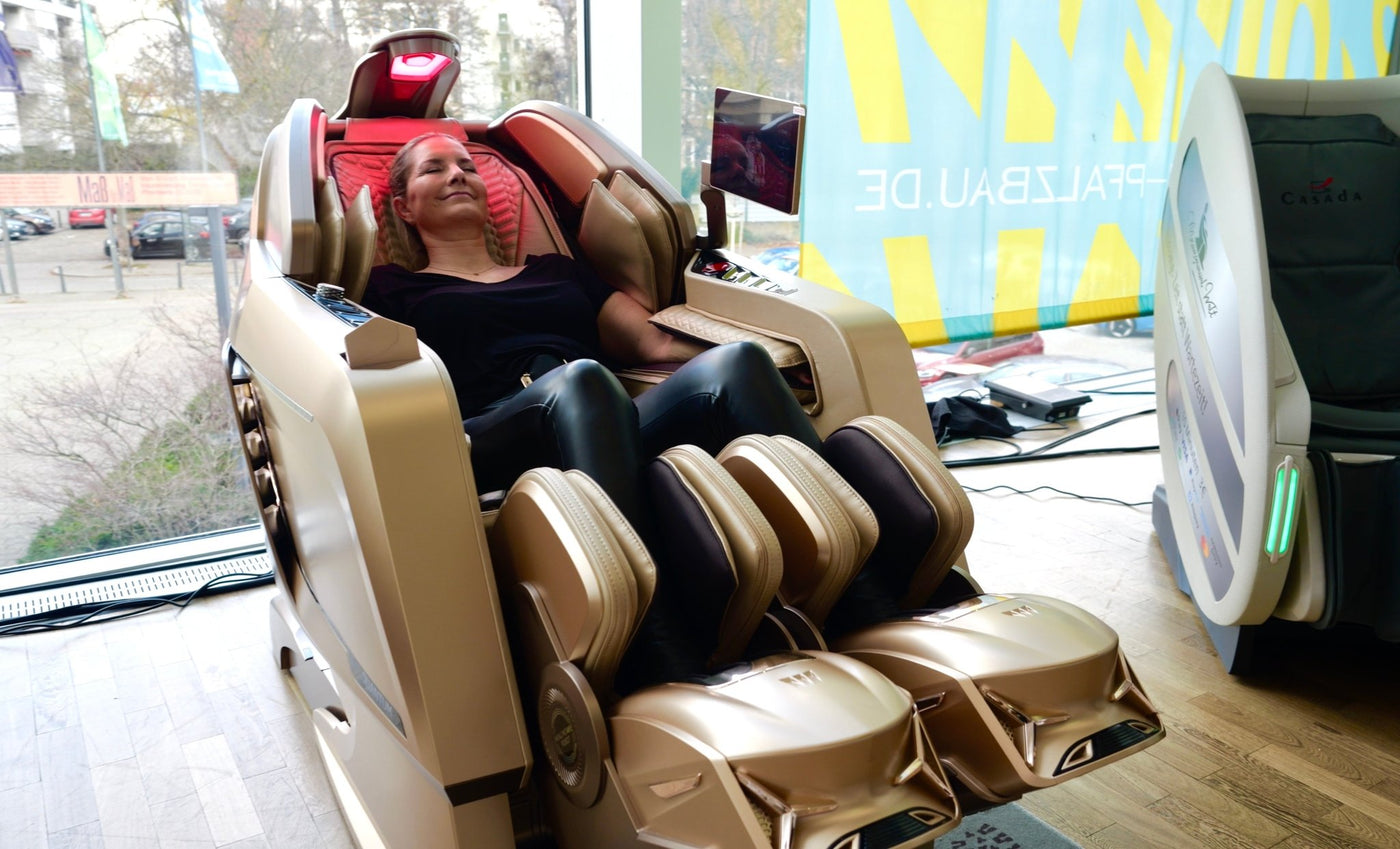
Bodyfriend Quantum Beauty Capsule, Rückenlehne zurückgefahren. Die Beine liegen in zwei getrennten Auflagen.
Ein zweites Modell kommt in den nächsten Wochen dazu, mit 8 eigenen Dehnprogrammen, darunter je eins für den Hüftbeuger und für den Piriformis. Sobald es aufgebaut ist, können Sie beide direkt nacheinander ausprobieren. Das ist ohnehin die einzige Art, den Unterschied zu beurteilen.
Wann Sie nicht dehnen sollten
Ein paar Situationen gehören vorher mit dem Arzt oder dem Physiotherapeuten besprochen, unabhängig davon, ob Sie selbst dehnen oder sich dehnen lassen:
- frische Operationen an Hüfte, Knie oder Wirbelsäule, und die ersten Monate nach einer Endoprothese
- akuter Bandscheibenvorfall mit Ausstrahlung ins Bein oder mit Taubheitsgefühlen
- fortgeschrittene Osteoporose
- bekannte Thrombose oder eine Gerinnungsstörung
- Schwangerschaft, weil das Bindegewebe ohnehin nachgiebiger ist und Sie leicht über das Ziel hinausdehnen
Und die Frage, die uns am häufigsten gestellt wird: Ersetzt der Sessel die Physiotherapie? Nein. Er ersetzt sie nicht. Er füllt die 6 Tage zwischen zwei Terminen, an denen sonst nichts passiert. Wer gerade in Behandlung ist, spricht vorher mit seinem Therapeuten darüber.
Ausprobieren statt lesen
Ob Ihnen ein Dehnprogramm im Sessel etwas bringt, merken Sie in den ersten 2 Minuten, in denen Sie drinliegen. Ob Ihre Körpergröße zur Beinauflage passt, auch. Das lässt sich nicht lesen und nicht über ein Datenblatt entscheiden.
In unseren Ausstellungen stehen die Sessel aufgebaut da, und Sie setzen sich der Reihe nach rein. Es gibt nicht den besten Sessel, es gibt die besten. Welcher davon Ihrer ist, entscheidet sich im Sitzen.
Wo Sie ihn finden und wann Sie kommen können: Probesitzen und Termine
Quellen
Was oben an Zahlen steht, stammt aus diesen Arbeiten. Alle sind frei zugänglich, Sie können also nachlesen, wer da was gemessen hat und an wem.
- Sitzen und Rückenschmerz. Abbas J et al., Is Hip Muscle Flexibility Associated with Low Back Pain Among First-Year Undergraduate Students. J Clin Med 2024;13(24). PubMed Untersucht wurden Studierende im ersten Jahr, nicht die Allgemeinbevölkerung.
- Wärme vor dem Dehnen. Nakano J et al., The effect of heat applied with stretch to increase range of motion: a systematic review. Phys Ther Sport 2012;13(3):180-8. PubMed
- Massage vor dem Dehnen. Capobianco RA et al., Self-massage prior to stretching improves flexibility in young and middle-aged adults. J Sports Sci 2019;37(13):1543-50. PubMed
- Passiv oder selbst dehnen. Winters MV et al., Passive versus active stretching of hip flexor muscles in subjects with limited hip extension. Phys Ther 2004;84(9):800-7. PubMed
- Anspannen und lösen (PNF). Hindle KB et al., Proprioceptive Neuromuscular Facilitation: Its Mechanisms and Effects on Range of Motion and Muscular Function. J Hum Kinet 2012;31:105-13. PubMed
- Wie oft und wie lange. Konrad A et al., Chronic effects of stretching on range of motion with consideration of potential moderating variables. J Sport Health Sci 2024;13(2):186-94. PubMed
Alle Arbeiten zu Massagesesseln führen wir getrennt davon auf, mit Teilnehmerzahl, Ergebnis und der Angabe, wer sie bezahlt hat.


